
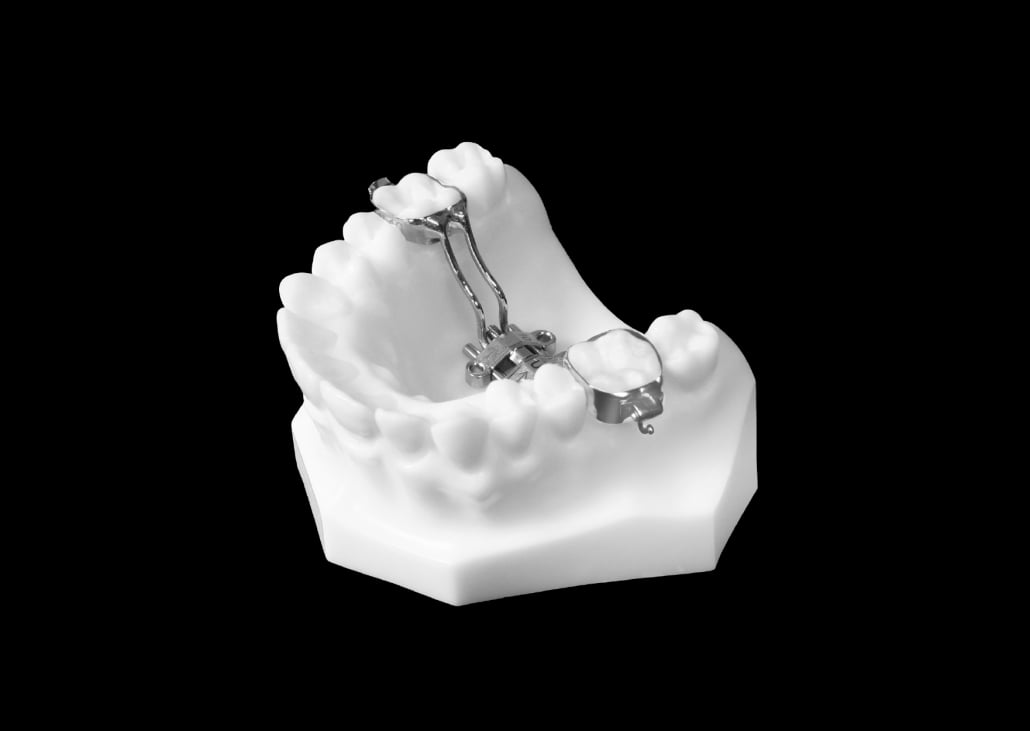
A dental model shows a Maxillary Skeletal Expander for MARPE at Elara Orthodontics in Richmond or Houston, TX, on black background.

Maxillary Skeletal Expander (MSE / MARPE) in Richmond & Houston Heights

A close-up of an MSE appliance with a digital airway scan showing improved nasal volume, illustrating how expansion can enhance breathing and smile alignment.
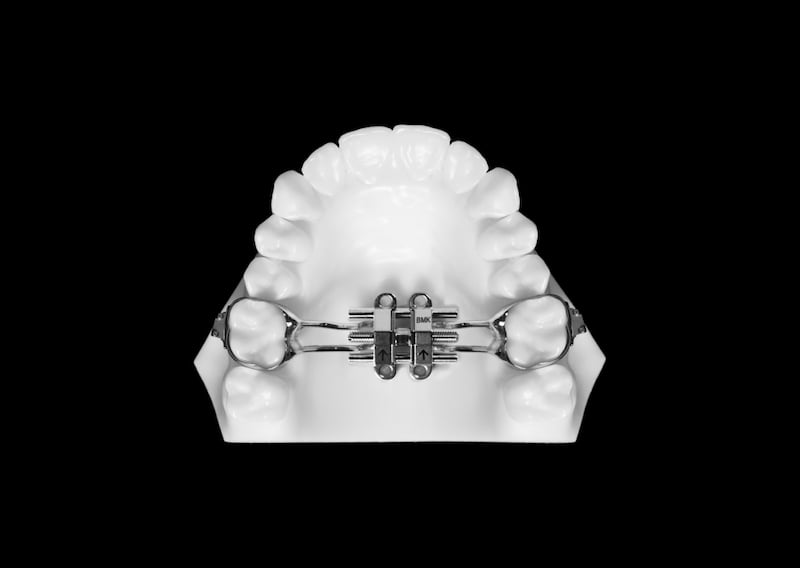
A dental model shows a MARPE palatal expander, offered by Elara Orthodontics in Richmond or Houston, TX.

What is a Maxillary Skeletal Expander?

At Elara Orthodontics, Dr. Sara Abedini and Dr. Sam Elkenawy are among the few orthodontists in the region actively publishing research on skeletal expansion and airway improvement.

A Maxillary Skeletal Expander (MSE) – also known as Miniscrew-Assisted Rapid Palatal Expander (MARPE) – is a specialized appliance designed to expand the upper jaw at the bone level, even in older teens and adults. Unlike traditional expanders that primarily move teeth, MSE uses tiny titanium mini-implants anchored into the palate to create true skeletal change.
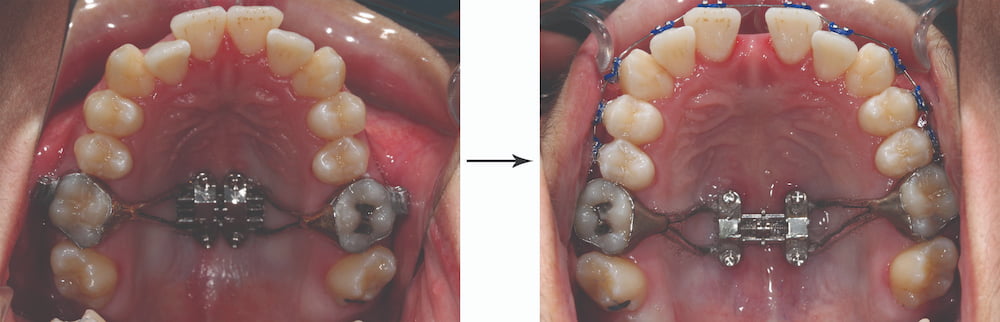
Before-and-after images of an MSE2 MARPE expander at Elara Orthodontics in Richmond or Houston, TX, showing dental arch changes.

Why Choose MSE / MARPE?

Effective Beyond Childhood – Works even in teens and adults after mid‑palatal suture fusion.
Airway & Sleep Benefits – Can improve nasal airflow and help manage certain types of sleep apnea.
Minimally Invasive – In‑office procedure with minimal downtime.
Research-Based Expertise – Backed by peer‑reviewed studies we’ve authored, including:
Orthodontist with stethoscope demonstrating dental treatment benefits using tooth model to patient in bright modern office, explaining MSE/MARPE advantages at Elara Orthodontics Richmond and Houston, TX.

How MARPE Works

Digital Planning

CBCT and digital models determine optimal appliance position.

Precise Placement

The expander is anchored with 4-6 mini‑implants under local anesthesia.

Gradual Expansion

You activate the screw at home as directed; we perform periodic checks.

Retention Phase

The appliance stays in place for several months to stabilize the new width, then it’s removed.
Female orthodontist examining patient's mouth and airway in modern clinic, demonstrating sleep apnea treatment and airway improvement benefits at Elara Orthodontics in Richmond and Houston, TX.

Sleep Apnea & Airway Benefits

A narrow upper jaw can constrict the nasal cavity, increase airway resistance, and contribute to obstructive sleep apnea (OSA) symptoms.

Wider Nasal Passages – Expansion increases nasal volume, making nasal breathing easier.
Reduced Mouth Breathing – Promotes healthier nighttime airflow patterns.
Documented Results – Studies (including our own) show measurable increases in airway volume and reductions in OSA symptoms in select patients after MSE/MARPE.

Important note
MSE/MARPE is not a cure for sleep apnea, but it can be a key component of a comprehensive plan coordinated with sleep physicians and ENT specialists. Results vary by age, anatomy, and severity.

What Is the FME Facegenics Midfacial Expander?
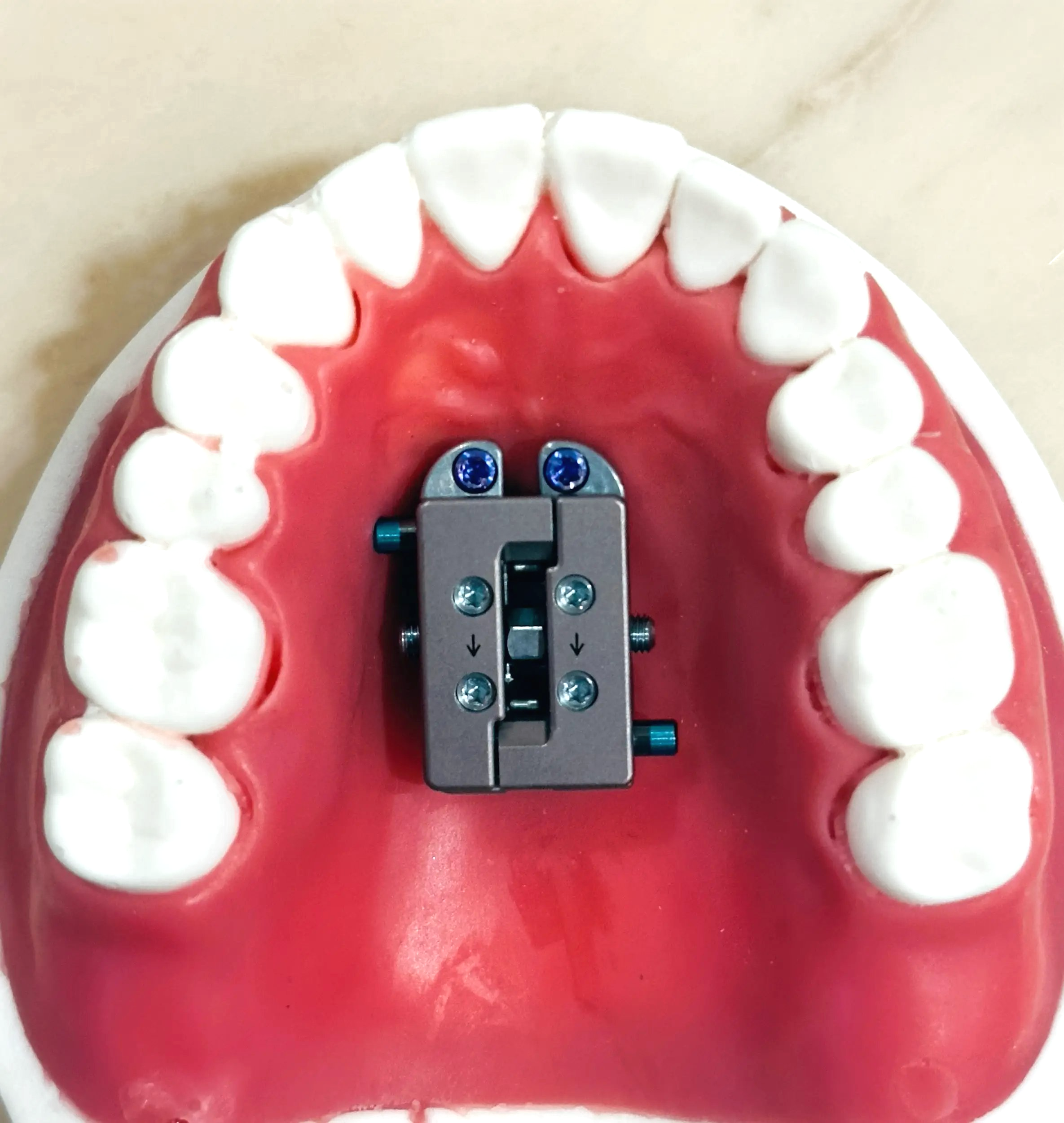
A dental model with a FME appliance on upper teeth, as offered by Elara Orthodontics in Richmond or Houston, TX.

The Facegenics Midface Expander (FME) is a custom-made, bone-anchored palate expander designed specifically for adults who want to widen the upper jaw and midface without undergoing surgery. Unlike conventional expanders that rely on teeth for support, the FME uses between 6 and 10 titanium screws — known as temporary anchorage devices (TADs) — inserted directly into the bone of the palate. Each device is individually crafted using 3D cone-beam CT imaging, ensuring a precise fit tailored to the patient’s unique anatomy. The result is a purely skeletal expansion appliance that applies controlled, evenly distributed force across the midface with no tooth involvement whatsoever.

Why Choose the FME?

The FME stands out from other adult expansion options for several compelling reasons. Because it anchors entirely to bone rather than teeth, it eliminates the dental side effects — such as molar tipping — that can occur with hybrid devices like the MSE. Its higher number of TADs (6–10 compared to the MSE’s 4) allows for better force distribution and potentially greater skeletal expansion. Patients who undergo FME treatment commonly report meaningful improvements in nasal breathing, tongue space, sleep quality, and facial symmetry, along with a wider, more balanced smile. For adults seeking a non-surgical alternative to jaw surgery, the FME offers a compelling middle ground between traditional orthodontics and more invasive procedures.

In a bright office at Elara Orthodontics in Richmond or Houston, TX, a female doctor explains FME benefits to a male patient.

How FME Works

Digital Planning

Your provider uses 3D cone-beam CT imaging to map your palatal anatomy and design an expander built specifically for your jaw structure.

TAD Placement

Under local anesthesia, 6–10 titanium screws (TADs) are anchored directly into the palatal bone using a surgical guide. The custom FME device is then attached to the TADs, distributing expansion force evenly across the midface with no tooth involvement.

Daily Activation

Patients turn a small expansion screw at home one to two times per day, delivering roughly 0.2mm of widening per turn. This continues for one to three months until the target expansion is reached.

Retention Phase

The device remains in place for 6 to 12 months to allow new bone to form and stabilize. Once consolidation is complete, the FME is removed, and the patient transitions to a retainer or further orthodontic care.

Who is a Candidate?

Older teens and adults with narrow upper jaws
Patients with crowding or crossbite are linked to skeletal constriction
Individuals with diagnosed or suspected airway limitations related to jaw structure (snoring, nasal blockage, OSA)
Those seeking a non-surgical alternative to SARPE
Able to tolerate mini-implants and follow activation/retention instructions
Confirmed suitable on CBCT/clinical exam (adequate bone, suture patency, root proximity checked)

Our Technology & Approach

CBCT Airway Analysis – Track airway and nasal volume before and after expansion.
Digital Appliance Design – Precision fit for comfort and efficiency.
Evidence-Based Protocols – Guided by peer‑reviewed research and extensive clinical experience.
Two Convenient Locations – Richmond and Houston Heights.

FAQ

How long does MSE treatment take?

Active expansion typically takes 2–4 weeks, followed by several months of retention to stabilize the result.

Is MSE or MARPE painful?

You may feel pressure or mild discomfort during activation and the first few days, but most patients adapt quickly. Over‑the‑counter pain relief is usually sufficient if needed.

Can it replace surgery?

In many teens and adults, yes. MSE can achieve skeletal expansion without SARPE surgery, depending on anatomy and age. We’ll confirm with imaging.
Smiling male orthodontist in white coat and female dental assistant in mint scrubs giving thumbs up in modern clinic, representing excellent patient care at Elara Orthodontics Richmond and Houston, TX.

Why Elara Orthodontics?

Two doctors actively publishing on MSE and airway health
Among the most experienced MSE providers in Texas
State-of-the-art digital workflow for precise, comfortable treatment
Focus on both smile aesthetics and functional breathing improvements