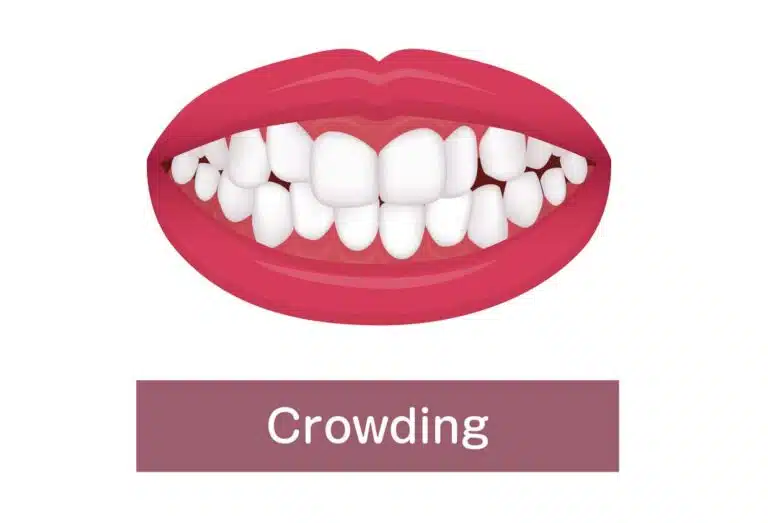

The standard explanation is that mouth breathing “changes face shape,” but the actual mechanism is more specific and worth understanding directly: the tongue’s resting position against the roof of the mouth acts as an internal mold, guiding how wide the upper jaw grows during childhood. Mouth breathing changes exactly that tongue position, which removes the shaping pressure that normal nasal breathing provides.
If you’re researching mouth breather face in Houston and Richmond, TX: chronic mouth breathing changes where the tongue rests, which removes a natural shaping pressure on the upper jaw during growth, often resulting in a longer facial profile, a narrow palate, and dental crowding. This is why palatal expansion, not just braces alone, is often the direct countermeasure: it mechanically restores the widening pressure the tongue would normally provide, rather than just repositioning teeth.

The Tongue as an Internal Mold
During normal nasal breathing, the tongue rests against the roof of the mouth at rest, applying gentle, continuous outward pressure against the upper jaw from the inside. Over years of childhood growth, this pressure is part of what guides the palate to develop with normal width, functioning almost like an internal mold shaping the bone as it grows.
When a child breathes through the mouth, whether from allergies, enlarged tonsils, a deviated septum, or habit, the tongue has to drop low and forward to keep the airway open, since it can no longer rest comfortably against the palate while air is being pulled in through an open mouth. That change in tongue position removes the internal shaping pressure the palate would otherwise be receiving, and without it, the upper jaw tends to grow narrower and taller instead of wider, which is the mechanical origin of the long, narrow facial pattern associated with chronic mouth breathing.
Why Expansion Specifically Is the Direct Countermeasure
This mechanism is exactly why palatal expansion, rather than braces or aligners alone, is often the direct treatment for a narrow, mouth-breathing-associated palate. An expander applies outward pressure across the upper jaw, mechanically substituting for the widening force the tongue would have provided if it had been resting in its normal position throughout development. This is treating the actual structural cause, not just straightening the teeth that ended up crowded as a downstream consequence.
Dr. Sam Elkenawy, an orthodontist at Elara Orthodontics whose published work includes research on digital orthodontics and skeletal expansion, notes that this is part of why airway-related crowding responds differently to treatment than crowding from other causes: addressing the palate width directly, rather than only aligning teeth, addresses the mechanism rather than just the visible symptom.
Why Timing Matters for This Same Reason
The bone in a child’s upper jaw is joined at a suture down the middle of the palate that hasn’t fully fused, which is what allows an expander to actually widen the bone rather than just tip teeth. As this suture gradually fuses through the teenage years, expansion becomes progressively less effective at achieving true skeletal widening, and older patients may need surgically-assisted expansion or a different combination of treatments to achieve a similar result. This is a direct consequence of the same growth mechanism: catching the airway and palate issue while the suture is still open is what allows the direct, mechanical countermeasure to work as intended.
Related Habits and Reinforcement
Dr. Andre Correia Jham, an orthodontist at Star Smiles Orthodontics and Pediatric Dentistry in Bloomingdale, IL, notes that simple daily habits, practicing lip closure while reading or watching television, and maintaining good posture, reinforce the tongue and lip position treatment is working to restore, which supports the mechanical correction rather than replacing it.
What This Means for Oral Health
A dry mouth from chronic mouth breathing reduces saliva’s natural protective effect, since saliva rinses debris and buffers the acid plaque produces. This means mouth breathers are also at somewhat higher risk for cavities and gum irritation, independent of the facial growth pattern, which is a separate reason addressing the underlying breathing pattern matters beyond appearance alone.
When to Get an Evaluation
Snoring, open-mouth breathing during sleep, a visibly narrowing or lengthening facial pattern in a growing child, persistent dry mouth, or noticeable dental crowding are all reasonable prompts for an evaluation that looks at the airway and palate together, rather than treating crowding as an isolated dental issue.
Frequently Asked Questions
Can palatal expansion alone fix a mouth-breathing-related face shape?
Expansion addresses the palate width directly, which is the structural piece within an orthodontist’s scope. A full evaluation, often alongside an ENT, addresses the airway obstruction itself, since both the cause and the structural consequence typically need attention for the best result.
Is it too late for expansion if my child is already a teenager?
It’s more effective while the midpalatal suture is still open, but options like surgically-assisted expansion exist for patients whose suture has already fused. An evaluation with imaging determines what’s realistic for a specific case.
Does myofunctional therapy replace the need for an expander?
No. Myofunctional therapy retrains tongue and lip habits and supports the result, but it doesn’t mechanically widen a jaw that’s already grown narrow. The two approaches work together rather than substituting for each other.
Can adults still benefit from treatment if the growth years have passed?
Adults can still address the airway component and any resulting dental crowding, though achieving true skeletal widening typically requires a different approach, such as surgically-assisted expansion, since the growth-based method works only while the palate’s suture is still open.
Sources. General principles of tongue posture and its role in palatal development; craniofacial growth and midpalatal suture maturation; clinical and administrative observations from Elara Orthodontics, Richmond and Houston, TX.

Related Reading
Get an Evaluation That Looks at the Airway and the Palate Together
Elara Orthodontics assesses whether a narrow palate is tied to a mouth-breathing pattern before recommending expansion or any other treatment approach.
Book Your Free Consultation
Free consultation for new patients.